Weapons & loadouts
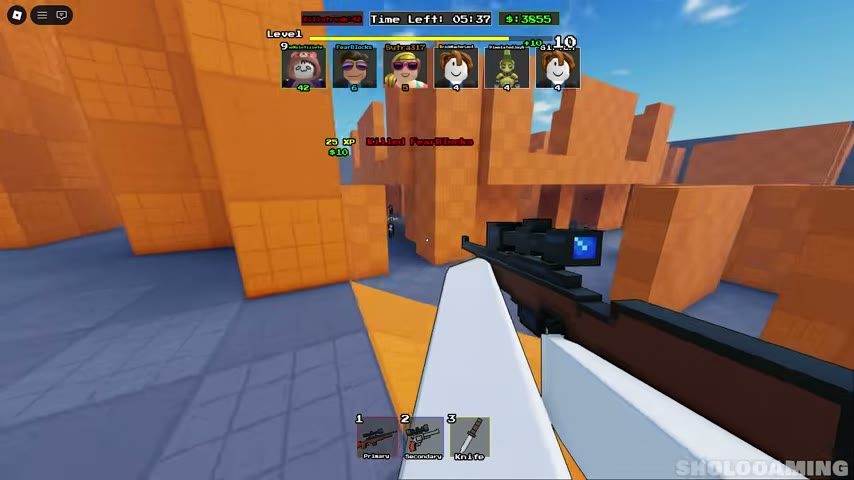
Snipers kill in one shot anywhere; secondaries need two hits but only one to the head; melee is mainly a movement tool and a finisher. Skins are purely cosmetic — a flashy weapon never changes damage.
One Tap compresses every shooter's weapon decision into three slots. No ammo economy, no recoil patterns, no attachment grid — just a primary that ends fights, a secondary for when it doesn't, and a blade that makes you faster. Picking them is 10% of your power. Knowing when to switch is the other 90%.
The three slots
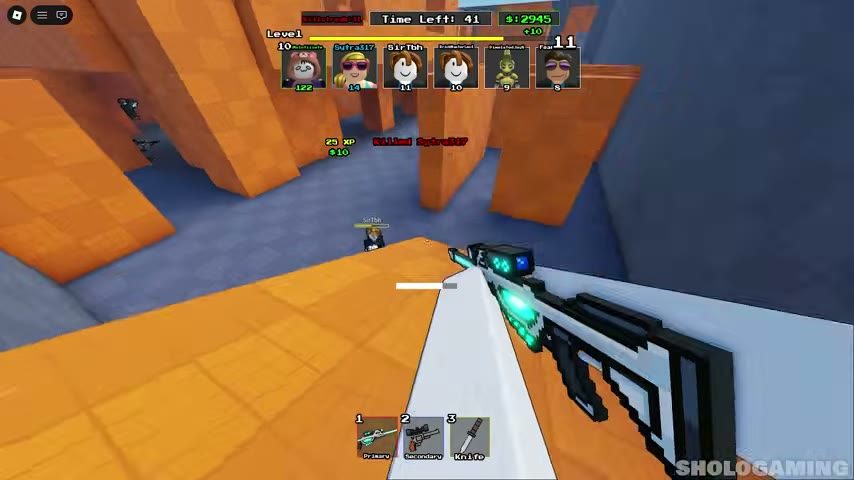
| Slot | Type | What it kills | Role |
|---|---|---|---|
| 1 — Primary | Sniper | One hit, anywhere | The reason the game is called One Tap |
| 2 — Secondary | Sidearm / revolver | Two hits — or one to the head | Your "they missed first too" insurance |
| 3 — Melee | Knife | Finisher + movement | Fastest way across the map |
Primary: the one-shot sniper
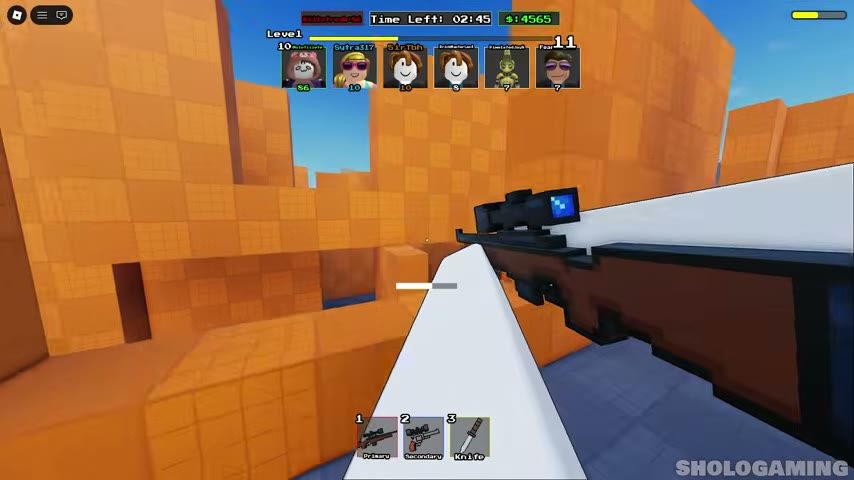
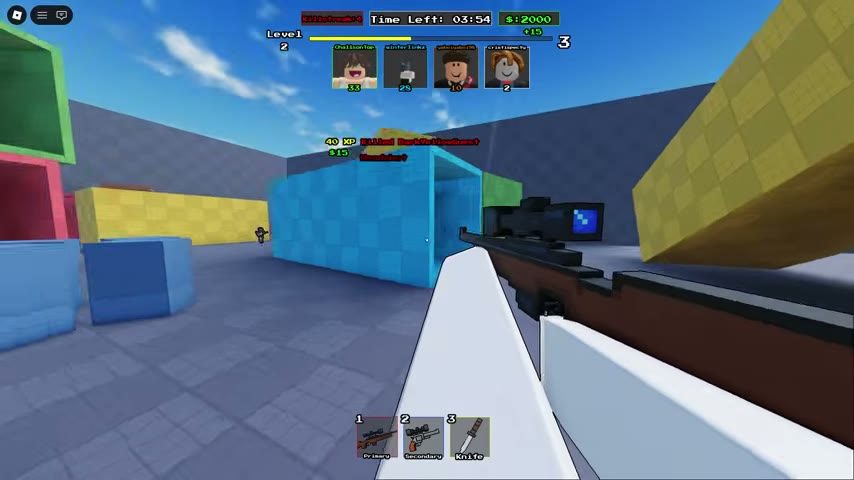
It's all true — the sniper is a single-hit kill on the whole body, not just the head. That lethality is the game's identity, and it changes what a "good primary" means: since everything one-shots, primaries are separated by scope feel, not damage. How fast you scope, how much screen the scope eats, how the reticle reads against a bright sky — those become your real stats. The default sniper is a clean baseline; trial others in the shop before spending anything.
Secondary: the two-tap rule
Your sidearm answers two situations: you missed the first shot, or someone closed the distance until a scoped rifle felt clumsy.
- Two hits anywhere — or one to the head. The headshot exception is the skill ceiling hiding in slot two: a clean secondary headshot is still a one-tap, just with a smaller tool.
- Mid-range, moving, unscoped is its house. Don't use it as a discount sniper; use it in the fight the sniper can't take.
- Suppressed variants trade feel for feel. Quiet shots change how fights start, not how they end — do the damage math and it's the same two hits.
Melee: speed and last words
The knife's headline feature isn't the blade, it's the legs. Carrying melee moves you noticeably faster, which makes slot three a rotation tool: cross dangerous ground with it out, swap up the moment a lane opens. If a duel collapses to knife range, a quick slash finishes what your sidearm started — but going knife-first against a ready opponent is how you end up in someone else's highlight reel.
What skins, cases and passes change
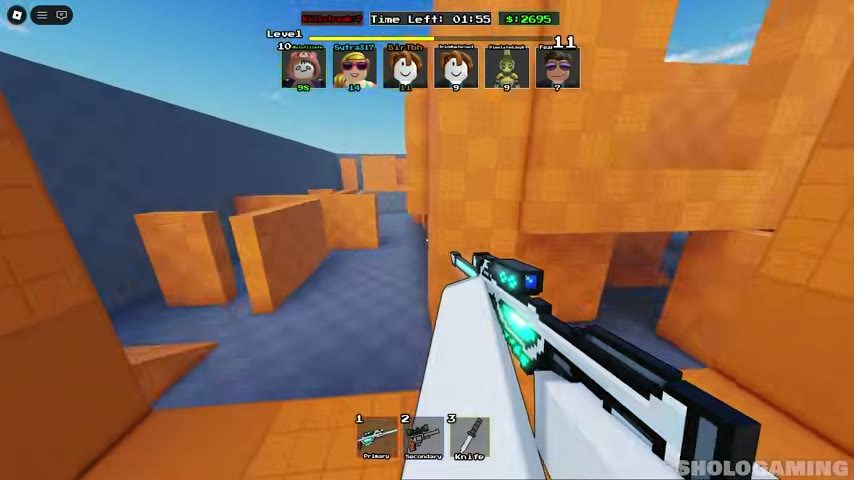
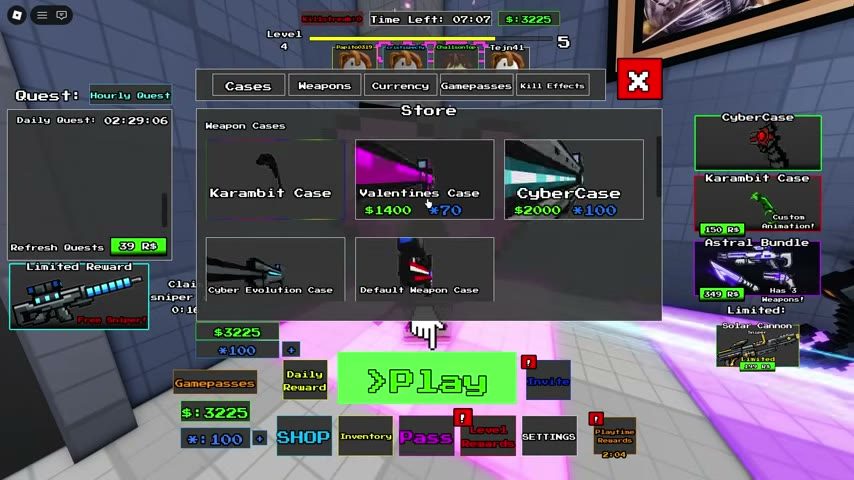
Nothing that matters. Weapon skins are cosmetic by design, cases drop cosmetics, and every game pass is convenience or vanity. A player with a glowing case-skin rifle dies to your default sniper exactly as fast as anyone else — the entire cases & cosmetics system is built around looking good, not hitting harder.
Building your loadout, step by step
- Start on defaults. Sniper, sidearm, knife is genuinely competitive. Every "best loadout" video is a preference layered on top of it.
- Find your scope. Trial two or three snipers across a few matches and notice which one clears your sightline fastest on the bright, summer-lit maps.
- Lock a secondary you'll actually practice. The sidearm you know beats the sidearm with the nicer case.
- Drill the swap. Primary for the first look, secondary when the lane collapses, knife the second you reposition. The swap is a rhythm — players who never swap lose to players who do.
That rhythm, plus the placement habits from the aim guide, is most of what separates a 30-kill lobby from a 10-kill one.
Verified against the live game on 2026-09-30. Community-reported details are written as such.